Pierre Van Vuuren
On 10 April 2026, within the concrete stillness of Inside Out Centre for the Arts, The BAM Collective presented ROMANTICISM 2026—a collection that resists the current global obsession with restraint and instead reclaims fashion as spectacle, emotion, and cultural release.
At a time where minimalism is often positioned as the pinnacle of taste, Romanticism 2026 asks a different question: what do we lose when fashion stops allowing us to feel?
Pierre Van Vuuren
Under the direction of Jacques Bam, the collection becomes less about trend and more about instinct—about returning to the original function of fashion within culture: storytelling, exaggeration, and transformation.
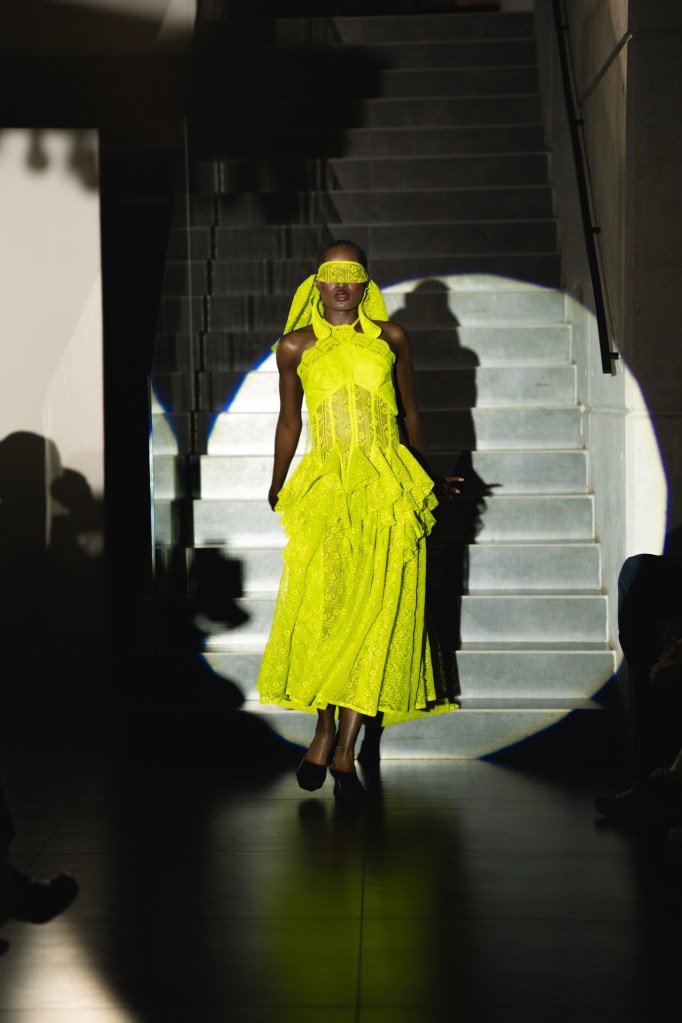
From the moment the show began, it was clear that this was not simply a presentation of garments, but a fully realised sensory experience. The intimate staging collapsed the distance between audience and runway, drawing viewers into a world where fashion operates as performance rather than product. Models moved like living sculptures through the space, framed by stark lighting and the raw architecture of the venue, heightening the emotional intensity of each look.
Pierre Van Vuuren
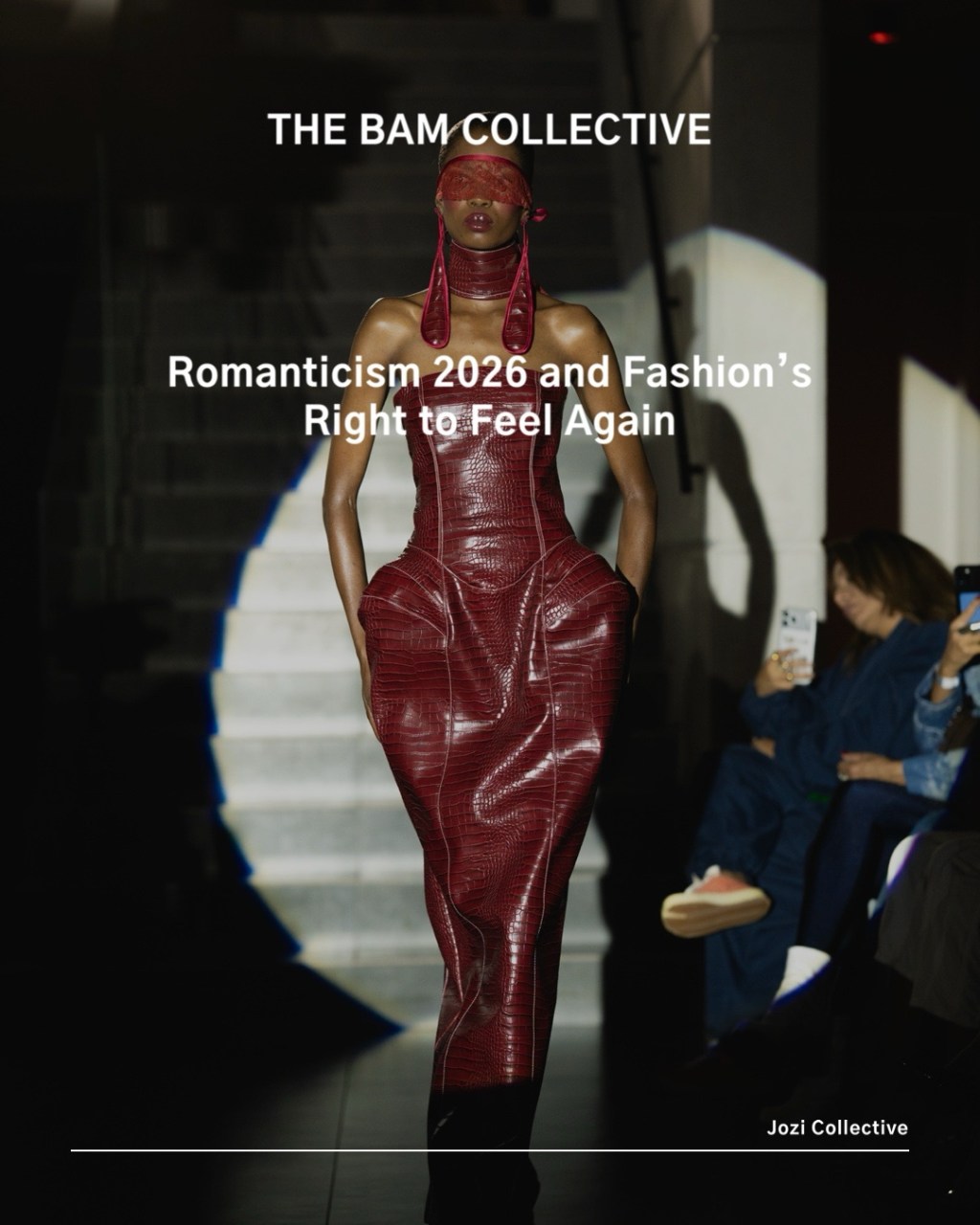
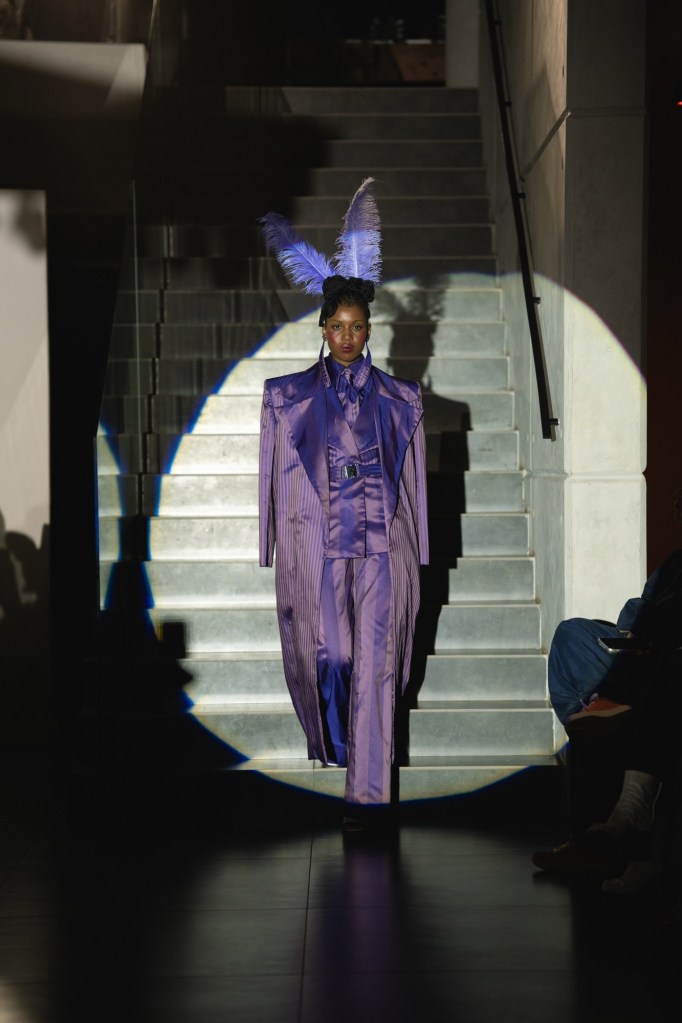
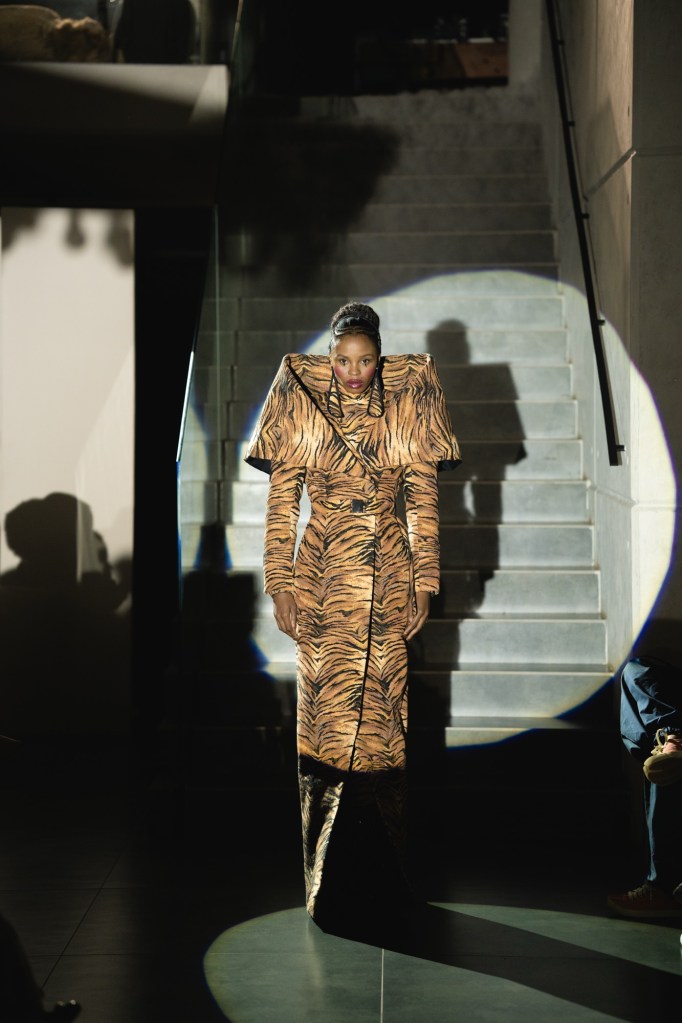
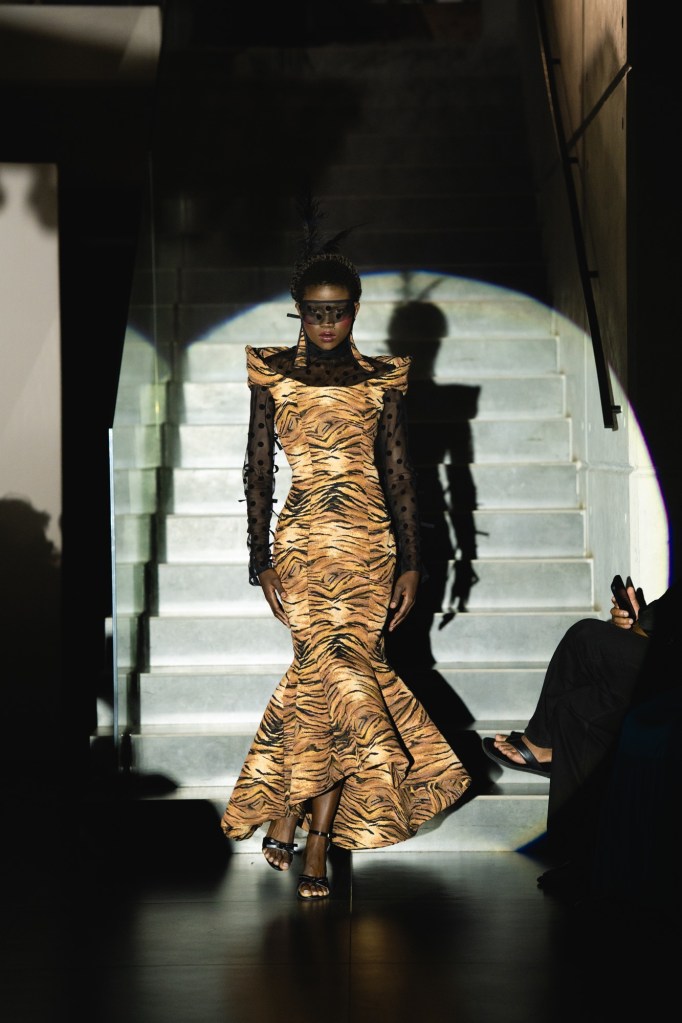
This proximity made every detail unavoidable. Fabrics didn’t just sit on the body—they asserted themselves. Textures layered with intention: tiger motif tapestry, crocodile-embossed upholstery, glossed vinyl, flocked tulle, and liquid silver plissé created garments that felt alive in their construction. There was a deliberate indulgence in materiality, a refusal to edit down.
Pierre Van Vuuren
Silhouettes extended into sculptural territory—architectural, exaggerated, and commanding. Garments framed the body rather than simply dressing it, pushing outward and upward, insisting on presence. Yet within this maximalism, there was control. Tailoring remained sharp, structure intentional, and embellishment precise.
There is a compelling tension that runs throughout Romanticism 2026: opulence held in balance with severity. It is this duality that prevents the collection from becoming costume. Instead, it exists as a refined expression of excess—disciplined, but never diluted.
In a global fashion landscape currently dominated by quiet luxury and understatement, The BAM Collective makes a decisive counterpoint. This is fashion that refuses to whisper. It insists on being seen, felt, and remembered.
What feels particularly significant within a South African context is this insistence on excess as a valid cultural language. In a country where fashion often oscillates between commercial viability and conceptual commentary, Romanticism 2026 occupies a third space—one that prioritises emotion, fantasy, and visual impact without apology.
There is a subtle defiance in that choice.
It suggests that African fashion does not always need to explain itself through heritage or politics to be meaningful. Sometimes, the act of creating beauty, of staging fantasy, of leaning fully into theatricality, is in itself a cultural statement.
Pierre Van Vuuren
More than anything, Romanticism 2026 restores a sense of wonder. It returns fashion to its most instinctive purpose—not to justify, not to simplify, but to transform.
In choosing excess, The BAM Collective doesn’t just present a collection—it makes a case for fashion’s emotional and cultural urgency in a time that often asks it to be smaller.
 The Jozi Collective
Leave a comment